


Specialized Miele Appliance Repair in San Francisco
Mon–Sat: 8:00 AM – 7:00 PM
A dishwasher that stays silent after you press start is often telling you something about the door, the water or a stored message. Here is the order to check them.
Miele repairSan Francisco Bay Area
A Miele dishwasher is built to refuse a cycle when something is not right. It will not run with an open door, without water, or while it holds a fault it considers unsafe. That makes a silent machine annoying but also informative. Working through the common reasons in order often turns up a simple cause, and when it does not, you will have the details a technician needs.
Three situations look alike but differ. In the first, the display is dark and nothing responds, which points at power. In the second, the display lights up and accepts a program, but the cycle never begins, which points at the door, a safety lock or a stored message. In the third, the cycle starts, then stops quickly with a message, which usually involves water supply or draining. Note which of these you have before touching anything.
Do not pull the dishwasher forward and unplug it behind the cabinet unless the installation is clearly designed for it. Many are hardwired, and working behind a tight cabinet is not for an owner.
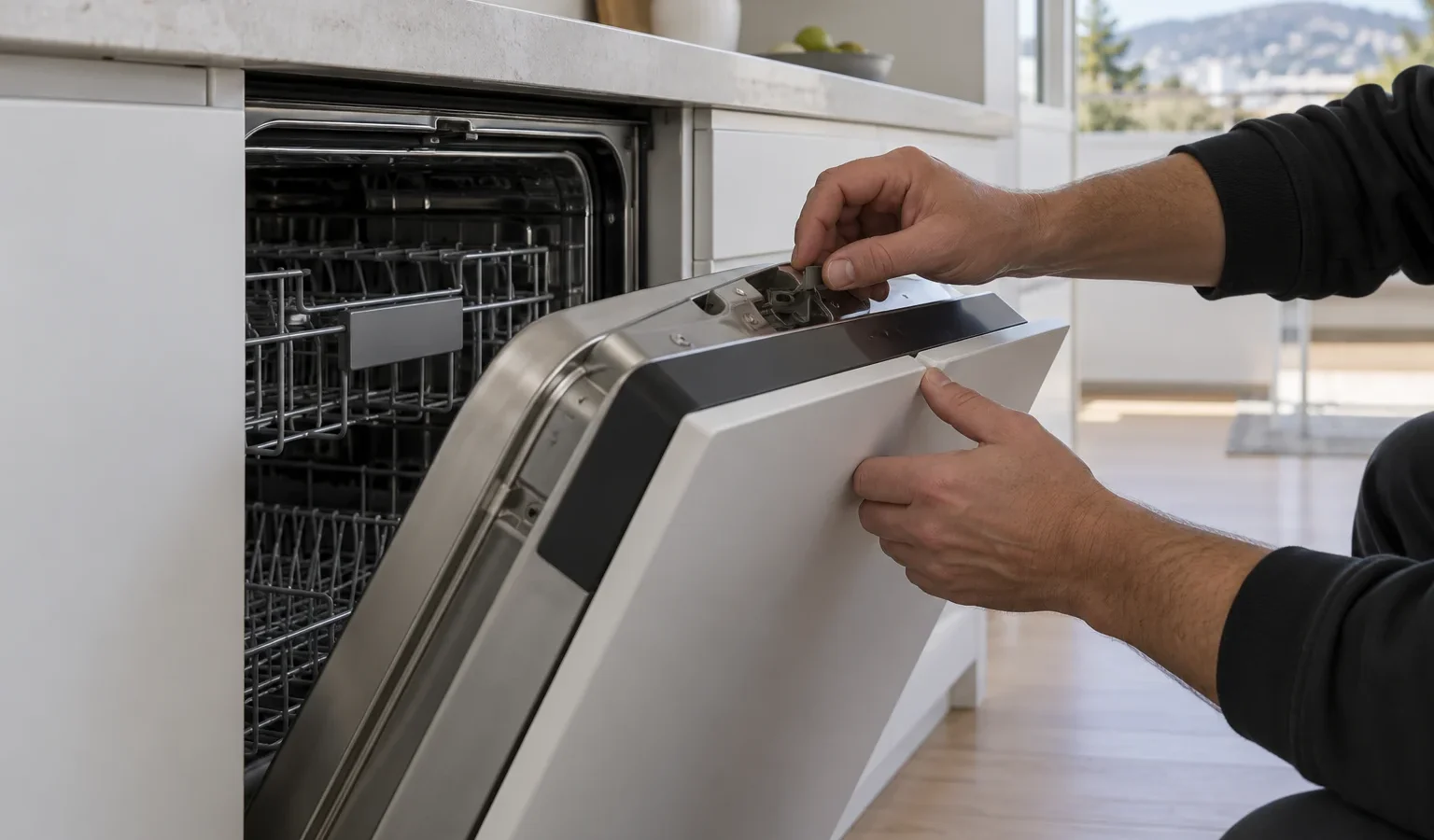
The most common reason for a silent start is a door that is not fully latched. A bowl or spray arm blocked by an overhanging item can keep the door a hair open. Open the door, check that nothing sticks out of the baskets, close it firmly and listen for the latch. If the display shows a door message, the control has not recognized a closed door. A door lock fault is covered at Miele dishwasher F36, which is described as a defective door lock switch, and Miele dishwasher F33 concerns the door not opening automatically or the locking pins not retracting on models with automatic door opening.
Handles in flush cabinetry can mislead you. On a panel-ready machine, the decorative front adds weight and can change how the door closes. If the door seems to close but pops open slightly, the hinge springs or the panel mounting may need a technician’s adjustment.
A machine will not run a cycle without a supply. A closed stopcock under the sink, a kinked inlet hose or a clogged inlet filter can all prevent it. The display may show text such as water intake or an open stopcock message, covered at Miele dishwasher water intake open stopcock. Inlet restrictions are also described under Miele dishwasher F12, F13 and F15. Check that the valve is open and the visible hose is straight, and stop there.
If the machine has detected water in its base, the leak protection can lock the cycle. The meaning is under Miele dishwasher Waterproof, and F70 describes the system being activated, the program cancelled and the drain pump starting. If you see water in the cabinet or on the floor, close the supply valve and switch off the power. A machine with water standing in it may also refuse to start. In that case read Miele dishwasher not draining.
Integrated dishwashers sit under a continuous counter, often with the supply, drain hose and power tucked into a narrow gap beside the sink cabinet. After a kitchen remodel, a hose can end up pinched by the machine itself, or the door can rub on a newly fitted toe-kick or an oversized panel. A machine that began to misbehave right after the cabinetry was touched deserves a look at those contact points, and a technician can check the fit without disturbing the plumbing more than needed.
Do not bridge the door switch, open the control panel or run the machine with the lower access panel off. Do not keep pressing start repeatedly, because some faults latch and need a technician to clear them properly. If you smell burning or hear a loud electrical hum, turn the power off at the breaker.
Book a diagnosis when the machine stays silent after the power, door, water and message checks, when the same message returns or when water is present in the base. Have the full model label ready. The data plate is usually on the door edge or inside the door frame. Our Miele dishwasher lineup page lists the types we service, and a model such as the Miele G 7186 SCVi shows the kind of label detail we look for. The visit starts with a diagnosis, you get a written estimate, and nothing is repaired without your approval. See Miele dishwasher repair for the full process.
The control may be waiting on the door lock, a delayed start or a stored fault. Check that the door latches, that no lock is active and that the display shows no message.
Yes. Under-sink outlets are often GFCI protected and may also feed a disposal. Reset it once and see whether the display returns.
It can. The machine may start filling and then stop with a water message. Opening the stopcock and straightening the hose fixes a surprising number of cases.
One or two attempts are fine. Repeated attempts with water in the base or an electrical smell are not, and the breaker should be switched off.
Look at the door edge or the inner door frame. Write down the full label, including letters, for the technician.
Share a few details and we’ll confirm an appointment. Prefer to talk? Call us and we’ll help right away.