


Specialized Miele Appliance Repair in San Francisco
Mon–Sat: 8:00 AM – 7:00 PM
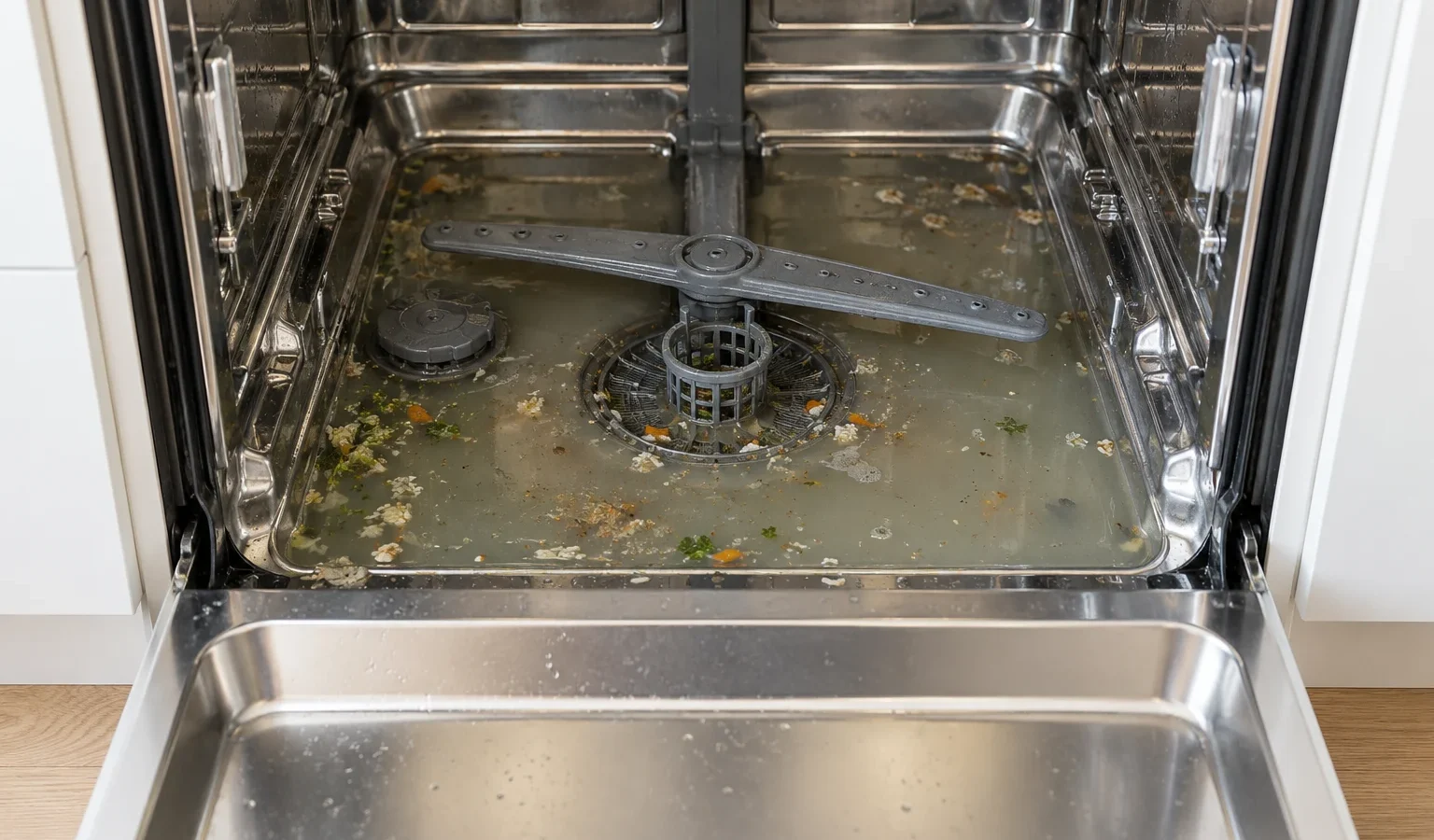
Water left in the tub points to a blocked filter, a kinked hose or a drain pump issue. Work through the checks in order and learn what the drain codes mean.
Miele repairSan Francisco Bay Area
A pool of gray water at the bottom of a Miele dishwasher is unpleasant and worth fixing quickly, since it smells and stops the machine from washing properly. The drain path is short but has several places to fail: the filter, the sump, the drain pump, the non-return valve, the hose and the household connection. Following that path from the inside out usually shows where it is blocked.
At the end of a wash, a drain pump pushes water out of the sump through a hose to the sink trap, a disposal inlet or a standpipe. A flap or valve stops dirty water from running back in. A filter in the tub keeps larger debris from reaching the pump. If any part clogs, kinks or fails, water stays behind. Because the hose runs up and over before it goes down in a proper installation, an installation fault can also keep water in the machine.
Current text-display models show a drain message, described at Miele dishwasher Drain, which refers to a water drainage fault and notes that water may remain in the cabinet. For many machines in the G 1xxx to G 6xxx range, Miele dishwasher F11 says water remains because the non-return valve is misplaced or the drain pump is blocked. Write the message down before you begin so you have it for a technician.
Do not disconnect hoses with water in them, reach into the pump chamber, or tip the machine. If a hose under the sink drips, close the stopcock and call for help.
The pump may be blocked by a hard object, worn or failed electrically. A technician can test it, clear the housing and check that the impeller turns. The pump may hum without moving water, or it may be silent.
A misplaced or stuck valve, which the F11 description names, lets water return to the tub or restricts the outflow. It sits near the pump and is not something an owner should dig for.
The circulation pump moves water around the tub during washing. Faults such as Miele dishwasher F14 and F69 are described as pump blockage after long idle periods, and they may appear alongside water that does not leave properly.
A pressure switch tells the control how much water is in the machine. A fault, as in Miele dishwasher F51, can lead the machine to misjudge levels. A technician reads the stored codes and tests the parts that match them.
The drain hose needs a high loop or an air gap to prevent backflow, and it must not be pinched behind the machine. After a remodel the hose is often pushed back, squeezed by the dishwasher or connected to a disposal inlet without the plug removed. A sink that drains slowly can also send water back through the dishwasher hose. If the sink itself is slow, the problem may not be the dishwasher at all. In older San Francisco flats and row houses, narrow shared drain lines can add to this, so a technician looks at the household side as well as the machine.
If water has leaked into the base, the leak protection may react. Miele dishwasher Waterproof describes the system reacting, and Miele dishwasher F70 says the program is cancelled and the drain pump starts. If that happens, close the supply valve, switch the machine off, and book a visit. Do not keep running it.
Note whether the problem appears every cycle or only with certain loads. A fault that comes and goes with heavy items is usually balance. One that follows every wash, with water left in the drum, points to the drain. A machine that fails only after a long idle period may have debris that settled in the pump. Writing down the program, the load and the message gives a technician a head start.
Avoid pouring drain cleaners into the tub, running the machine repeatedly with water in it, or probing the pump with sharp tools. Chemicals can damage seals and make later work unsafe for the technician. If dishes are also wet or gritty, read Miele dishwasher dishes still wet for the related causes.
Book a diagnosis when water remains after the filter and hose checks, when the drain message returns, when you hear the pump humming without draining, or when water appears outside the machine. Keep the model label ready. It is usually on the door edge or the inner frame. The Miele dishwasher lineup lists what we service, and a model such as the Miele G 7566 SCVi, a 24-inch dishwasher, shows the kind of label detail we ask for. The visit starts with diagnosis, you receive a written estimate and nothing is repaired without your approval. See Miele dishwasher repair.
The most common reasons are a clogged filter, a kinked hose, an unremoved disposal plug or a blocked drain pump. Start with the filter and hose checks.
It is mostly unhygienic. Scoop it out, clean the filter and keep the machine off if you see leaks or smell burning.
Yes. A slow sink or disposal can back up into the dishwasher hose. If the sink drains slowly, address that first.
No. It points to a misplaced non-return valve or a blocked drain pump. A technician checks which applies before any part is replaced.
Yes, run a short program and watch the base. If water remains, stop and book a diagnosis.
Share a few details and we’ll confirm an appointment. Prefer to talk? Call us and we’ll help right away.