


Specialized Miele Appliance Repair in San Francisco
Mon–Sat: 8:00 AM – 7:00 PM
Not every burning smell from a Miele oven is a hazard, but some are. Learn how to tell harmless residue from a real problem and when to switch off at the breaker.
Miele repairSan Francisco Bay Area
Ovens smell when they heat, especially at first use or after a long gap. That does not always signal trouble. The skill lies in telling the ordinary smell of cooking residue from the sharp, chemical or electrical smell that means something has failed. This guide sorts the two so you know whether to wait, clean or stop.
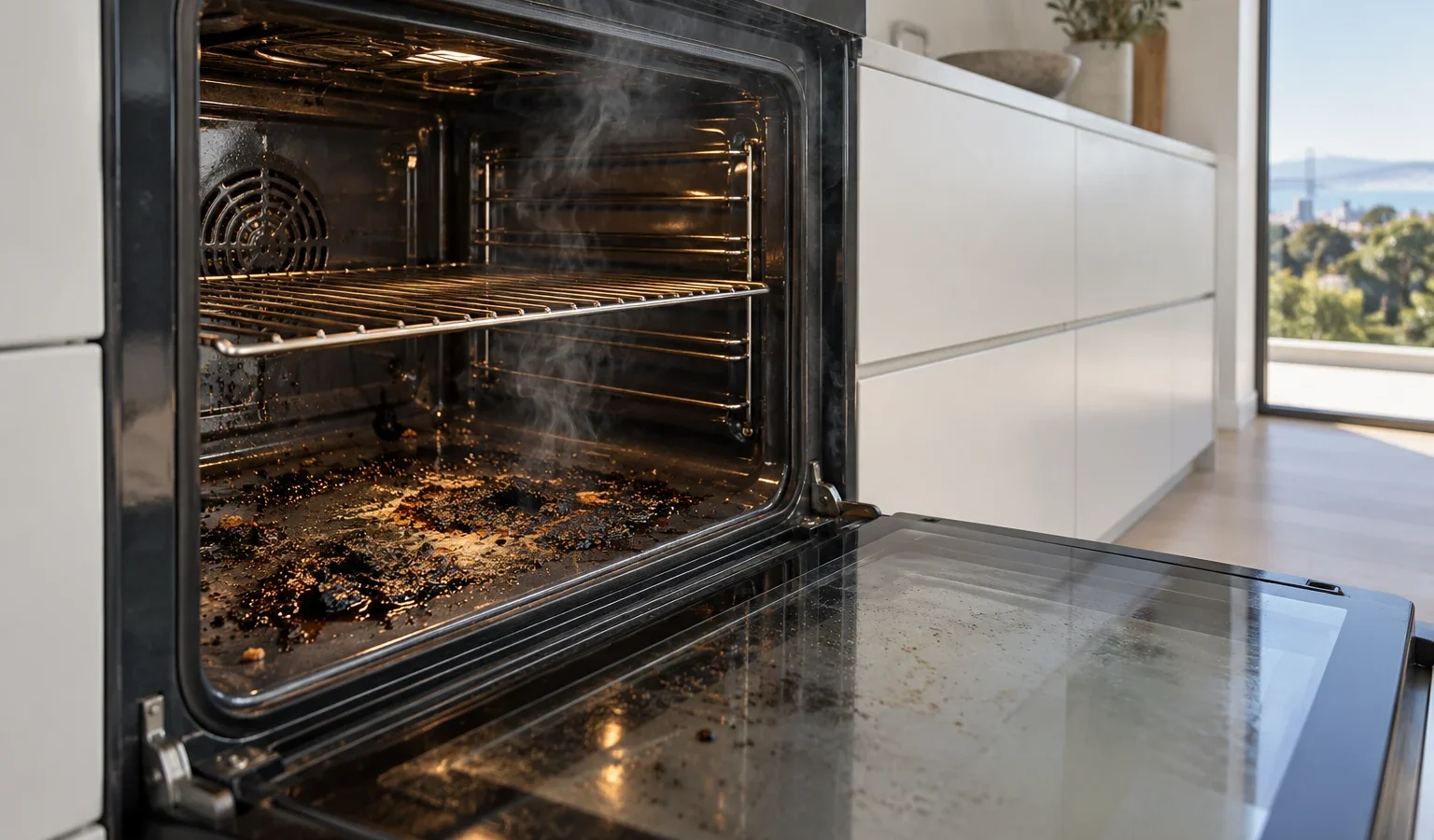
Most burning smells come from things inside the cavity, not from the oven itself.
These smells fade as the residue burns off and do not return once the cavity is clean. They have a food or dusty character rather than a plastic or fishy one.
Stop when the smell is sharp, like hot plastic, melting insulation or burning rubber, when it is accompanied by smoke you cannot trace to food, when the oven trips the breaker, or when you see sparks or flames. A fishy or electrical smell often comes from overheated wiring or components, and it should never be ignored. A burning smell from the control panel, the fan area or the cabinet around the oven rather than from inside the cavity is another warning.
If you see sparks or smell burning insulation or plastic, switch the oven off at the breaker and leave it off. If the oven is a gas appliance and you smell gas, leave the home, switch nothing on or off, and call the gas utility or 911 from outside.
Heat that cannot leave the cabinet makes ovens smell. Miele describes code F60 as insufficient appliance ventilation, noting the air duct may be covered. A cabinet crammed with baking trays or stored boxes can trap heat around the body of the oven and cook the insulation and the cabinet itself. Related heat messages include F134, described as the temperature sensor detecting that the oven compartment temperature is too high, a technical fault. Neither means a smell is certain, but both show that heat control deserves a technician if it appears alongside a burning odor.
Another message tied to long operation is F55, which Miele describes as the oven switching itself off after unusually long operation, after six hours in grill modes and twelve hours in others. A forgotten oven can smell scorched by the time it shuts down.
Pyrolytic cleaning burns soil to ash at very high temperature and always produces odor and some smoke, particularly when the cavity is heavily soiled. Ventilate the room and keep pets, especially birds, away from the kitchen during a cycle. Miele describes F23 as the cleaning temperature not being reached, often from heavy soiling. If the smell persists after the cycle and the ash has been wiped away, something else may be burning.
Do not keep cooking in an oven that smells of burning plastic or smells electrical. Do not spray water or cleaner into the cavity while hot, remove covers, or touch the elements. Do not use aerosol oven cleaner on a self-cleaning surface unless the manual allows it. Do not ignore a smell that starts in a cooling fan, control panel or the cabinet around the oven.
Wall ovens sit flush in tall cabinets, often next to a warming drawer or coffee machine, in a tight niche, which means heat has less room to escape. Sometimes a wooden shelf, a cabinet trim piece or insulation placed during a remodel sits too close. Mention any remodel when you book. Speed ovens that mix microwave and convection, such as the Miele H 7570 BM, and traditional wall ovens such as the Miele H 7263 BP have different internal parts. Your model number matters; it is usually on the frame behind the door.
A technician looks at the heating elements and their terminals, the wiring and connectors, the cooling fan and air paths, the door seal, the control module and the insulation. You get a diagnosis first, a written estimate, and nothing is repaired without your approval.
Book if the smell returns with a clean cavity, if it smells like plastic or electrical parts, if a message appears, if the breaker trips, or if you see smoke from the control area. See Miele wall oven repair, the wall oven lineup, our electrical warning signs guide, or the contact page for Bay Area visits.
A mild smell during the first few uses is common as protective residue burns off. Run the oven empty with the room ventilated, and it should fade.
Switch the oven off at the breaker, leave it off, and book a diagnostic visit. Do not use it again until it has been checked.
Yes. Grease and sugar on the cavity floor smoke noticeably. Let the oven cool, clean it as the manual describes, and the smell usually stops.
It does, especially with heavy soiling. Open a window, run the hood, and keep pets away from the kitchen during and after the cycle.
Treat that as a warning. Switch off the oven, clear anything stored near it, and arrange diagnosis, since heat may be trapped around the oven body.
Share a few details and we’ll confirm an appointment. Prefer to talk? Call us and we’ll help right away.