


Specialized Miele Appliance Repair in San Francisco
Mon–Sat: 8:00 AM – 7:00 PM
Clothes come out dripping when the drum fails to reach spin speed. Learn how loads, drainage, foam and drive faults each produce this symptom, and what to check first.
Miele repairSan Francisco Bay Area
You open the door to a drum of soaking clothes. The wash seemed to run, but the final spin never happened, or it began and stopped. A Miele washer skips or cuts short the spin on purpose when it senses a problem, because spinning a badly balanced or flooded drum can damage the machine. Reading what it is protecting against points you toward the cause.
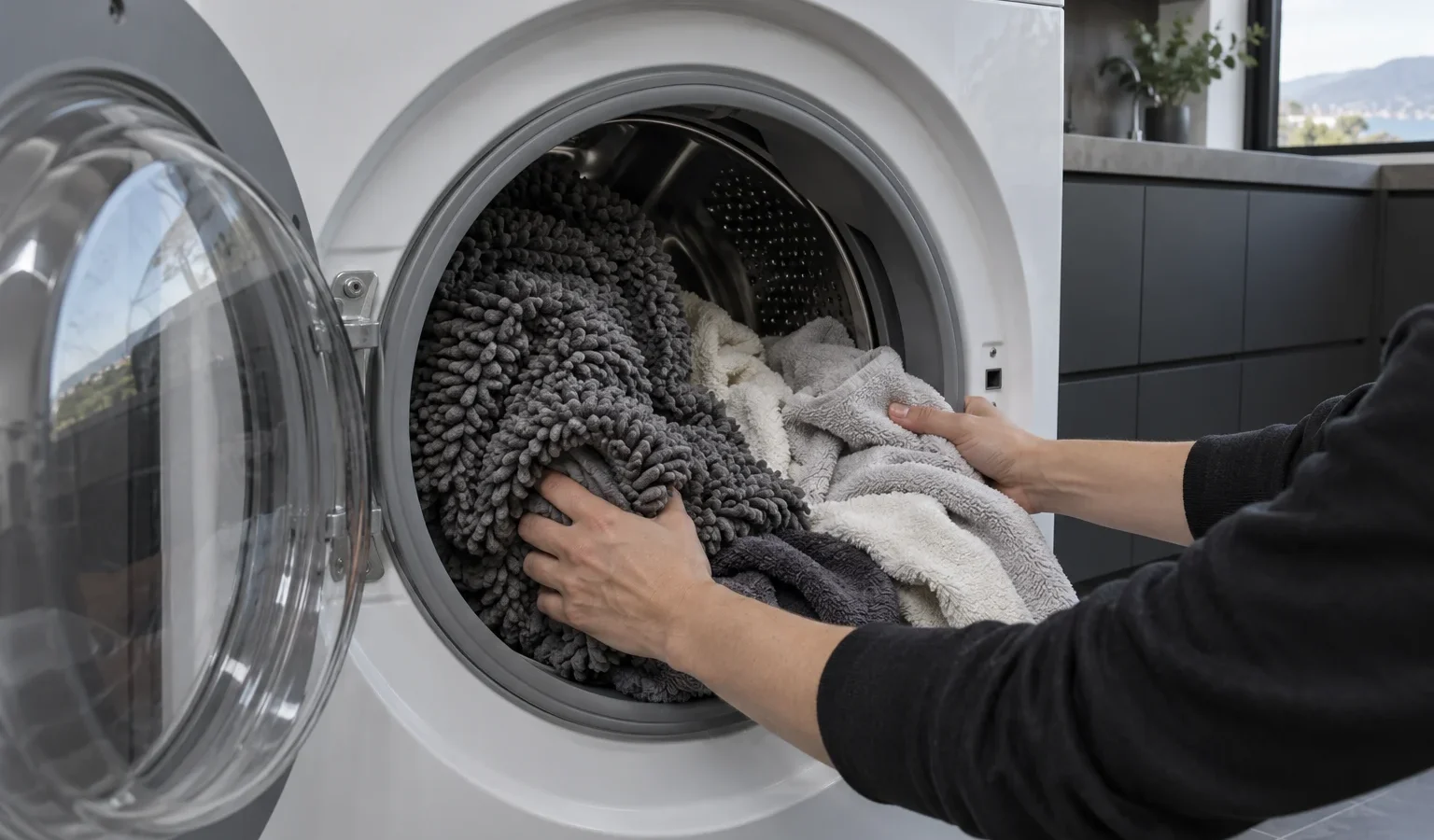
Spin requires a reasonably balanced drum. A single heavy item, such as a bath mat or a comforter, can bunch on one side. The machine tries to redistribute the load, and after several attempts it may give up and leave the clothes wet or lower the spin speed. Open the door, shake the items apart and spread them around the drum, then run a spin-only program. Small loads with one large item are the commonest trigger, so add a few towels or take the large piece out.
Check the program, too. Some settings, such as a delicate program or a spin speed reduced to zero, are working as set. Confirm the selected spin speed and any option like an extra rinse or a rinse hold, which stops the machine with water in the drum until you press a button.
A washer will not spin if it still contains water. A blocked drain filter, a kinked hose or a drain pump issue stops the water leaving, and the control then holds back the spin. A drain restriction is described at Miele washer F11: the drain filter or pump is blocked, or the drain hose is too high or kinked. Miele washer F37 says the washer is not level or the drain hose is connected too high.
Too much detergent produces suds that stop the drum from reaching speed. The relevant entries are Miele washer F56, in which the final spin speed stays below a low threshold because of excess foam from too much detergent, and F16, which is excess foam from detergent or additive. If you suspect foam, run a rinse or an extra rinse, use less detergent next time and follow the dosing guidance on the product for your water.
If the load is balanced, the drum is empty of water and there is no foam, the fault may lie in the drum drive. The codes Miele washer F104, F50 and F53 are all described as faults with the drum drive. A noise like a grinding hum, a drum that will not turn by hand when the power is off, or a burning smell suggests a bearing, a motor, a motor control problem or a control module issue. Do not test any of this yourself. A technician reads the stored faults and checks the motor, its connections and the control.
A washer that does not detect the door as locked will not spin. The relevant entries are Miele washer F34, where the door cannot lock, and F35, where it cannot unlock. Look for a stray sock caught in the door seal, a bent latch or a door that does not close fully. A dirty hinge contact, as in Miele washer F252, can also interrupt the cycle.
Many Bay Area homes have a washer in a closet, a hallway alcove or stacked under a dryer. In a narrow space the machine may sit against a wall, a hose may be crushed behind it, or an old wooden floor may flex and rock the washer during spin. An unlevel machine vibrates, the control senses imbalance and spin stops. A technician checks the level, the feet, the hose routing and any transit protection left in place after a move.
Clean the drain filter every so often, leave the door ajar after use so the drum dries, avoid overloading, and measure detergent rather than pouring freehand. Those four habits head off most spin complaints before they start.
Do not override the door lock, force the door open with water inside or reach into the drum area. If water leaks, close the supply valves and switch the washer off at the breaker. If a burning smell appears, power it down at once.
If the cycle stops but the clothes are not wet, read Miele washer stops mid cycle for a wider list of reasons.
Book a visit if the spin still fails with a balanced load, an empty drum and a clean filter, if drive or door codes recur, or if there is a smell or noise from the motor. Keep the model label ready. It is usually on the door rim or the inside of the door opening. The Miele washer lineup page shows what we service, and a model like the Miele WWH 860 WCS shows what the label looks like. You get a diagnosis first, a written estimate and no repair without your approval. See Miele washer repair.
An unbalanced load, foam, a door lock issue or a drive fault can all stop the spin after draining. Rebalance the load and check for foam first.
Yes. Excess suds reduce spin speed or cancel it. Rinse, use less detergent and follow the dosing guidance for your water.
Only when the machine has stopped, the drum has no water and the door releases normally. If it stays locked with water inside, do not force it.
Yes. A rocking machine triggers imbalance protection and may cut the spin short. A technician can set the feet and check the floor.
It is usually on the door rim or the inside of the door opening. Write down the full label, including letters.
Share a few details and we’ll confirm an appointment. Prefer to talk? Call us and we’ll help right away.