


Specialized Miele Appliance Repair in San Francisco
Mon–Sat: 8:00 AM – 7:00 PM
A sour or musty odor from a Miele washer usually points to damp residue in the door seal, drain filter or dispenser. Here is what to check first and when a technician should look.
Miele repairSan Francisco Bay Area
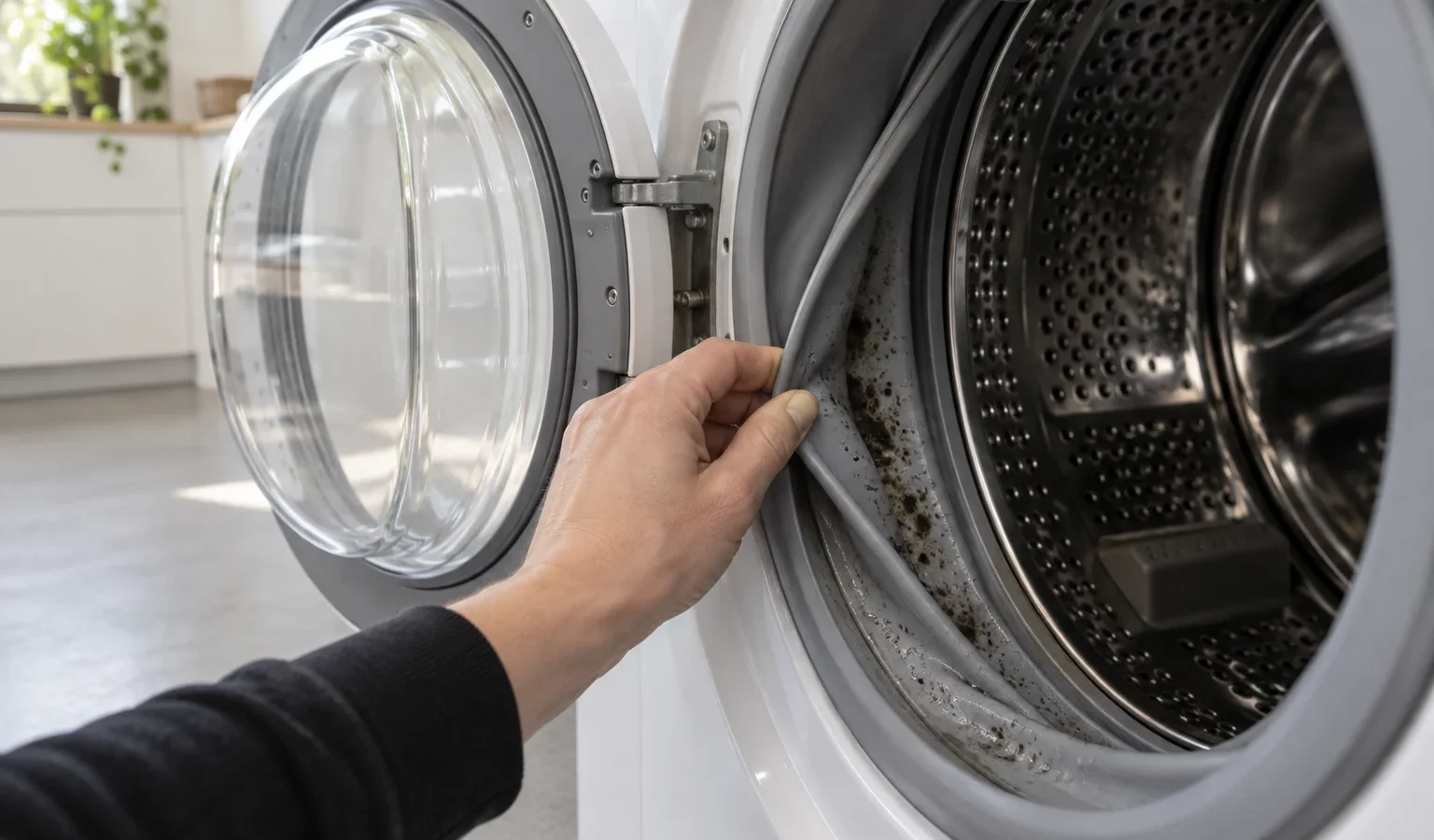
A musty washer rarely means the machine is broken. It means water, soap film and lint are staying behind between cycles and slowly turning sour. In a San Francisco flat, where the washer often lives in a closet or a hallway nook with the door shut, that damp air has nowhere to go, so the smell builds faster and clings to everything you wash.
The odor usually comes from one of four places: the rubber seal around the door opening, the drain filter behind the lower service flap, the detergent drawer and its housing, or standing water in the drain path. Each leaves a slightly different signature. A sour, almost dairy-like smell often means residue trapped in the folds of the door seal. A swampy smell that appears when the drum starts to fill points more toward the drain filter or the drain hose. A soapy, stale smell that shows up only on the first rinse suggests the dispenser.
Miele documents one related display message for washers: code F92 is described as mould building up after long use of only low-temperature programmes. If you ever see that on the display, it confirms the pattern, since cool, gentle cycles never flush residue out the way a hot wash does.
Most musty washers share the same routine. The door is closed the moment a load finishes. Cool washes are run week after week. Detergent is poured generously, because a big load seems to deserve it. Together those habits leave a thin film of soap and skin oil on the seal, the drum and the drawer, and that film feeds odor.
Another quiet contributor is a washer sitting slightly out of level or a drain hose set too high. Either one lets a little water stay in the sump after the cycle ends. Miele lists F37 for a washer that is not level or a drain hose connected too high, which is a reminder that the installation matters as much as the cleaning routine.
Everything here is done from the outside, with the washer switched off and the plug or breaker position left alone.
Write down anything unusual, including the exact display message, before moving on.
If the smell returns within a couple of loads after a thorough cleaning, something deeper is going on. Typical culprits include a drain pump that no longer empties the sump fully, a partly restricted drain hose, a worn door seal that has split and holds water in a crease, or a leak that keeps the floor tray damp. Miele describes F138 as water in the floor tray, with the Waterproof system activated by a leak, and F220 as the washer leaking. A leak that stays damp behind a closed cabinet can smell musty long before it shows on the floor.
Miele lists F16 for excess foam from too much detergent or additive. Foam traps soil where the rinse cannot reach, so foaming and odor often travel together.
A technician checks the drain pump and its inlet, the hose path, the seal and its drainage channel, the sump, and whether the machine sits level in its space. The visit starts with diagnosis, you receive a written estimate, and nothing is repaired without your approval.
Do not mix cleaning products or leave any cleaner sitting in the machine for days. Do not remove the cabinet panels, reach into the pump area, or run the washer with the drain filter loose. Do not keep using a washer that is leaking onto the floor, because wet flooring and electricity are a poor combination. If you see sparks or smell something burning rather than something stale, switch the machine off at the breaker and leave it off.
A short routine keeps the smell away. Wipe the seal after the last load of the day. Leave the door and drawer slightly open. Use less detergent than the bottle suggests, particularly with soft San Francisco tap water, which needs very little soap to lather. Run a hot cycle on a regular basis rather than only cool ones. Clean the drain filter on a schedule rather than when something goes wrong, and keep an eye on the floor beneath the machine for any dampness.
Book if the smell persists after the checks above, if water is pooling, if a display message keeps returning, or if the door seal looks torn. Have the model number ready; the label is usually on the washer door rim or the frame behind the door, and our guide on how to find your Miele model number shows the usual spots. Machines such as the Miele WWH 860 WCS and Miele WWB 020 WCS each carry their own label, and the exact number helps with diagnosis.
Read more on Miele washer repair or browse the Miele washer lineup. To arrange a visit across San Francisco or the Bay Area, use the contact page.
The smell can transfer to fabric, especially towels and gym wear, but the cloth is not damaged. After you clean the seal, drain filter and drawer, rewash the affected items on a warm cycle and the odor normally lifts.
Usually yes, as long as nothing is leaking and the display shows no fault. If you notice water on the floor, a burning smell or any sparks, stop using it and switch it off at the breaker.
Check it on a regular schedule, more often if you wash pet bedding, towels or shedding fabrics. Always let the water drain into a tray first and tighten the filter fully afterward.
Yes. Fresh air dries the seal folds and drum, which removes the damp that odor-causing film needs. Leave the door and the drawer slightly open once the last load is out.
A visit covers the drain pump, hoses, seal, sump and leveling, and you get a written estimate before any repair. Nothing is done without your approval.
Share a few details and we’ll confirm an appointment. Prefer to talk? Call us and we’ll help right away.