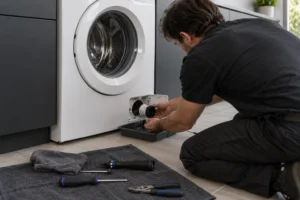
Washer Repair in San Francisco
Miele washer repair for San Francisco flats, closets and stacked laundry: draining, spinning, door lock, leak and dispenser faults, diagnosed before any…

Specialized Miele Appliance Repair in San Francisco
Mon–Sat: 8:00 AM – 7:00 PM
Tight Bay Area laundry closets leave no room for guesswork, so start with these signs and checks.
Miele repairSan Francisco Bay Area
In many Bay Area flats the washer lives in a hall closet, a bathroom alcove or a stack with a dryer above it. Space is tight, water lines run close by, and a leak can reach the neighbor below. Miele washers are made for that kind of home, but when one misbehaves the cause may be the drain, the door lock or the electronics. Our Miele washer repair service sorts out which, and the notes below give you a head start.
We list five washers. The PWM 908 is the entry for professional-style units. Four more are WCS models: the WWB 020 WCS, WWF 060 WCS, WWH 660 WCS and WWH 860 WCS. All are current. We do not assign capacities or features to a particular model here, because the label and the unit in front of the technician decide that.
The label is usually on the door rim or inside the door opening, sometimes at the edge of the door frame. With a stacked pair, the washer is the lower unit and its label is visible when you open the door fully. Take a clear photo.
Start with the symptom guides. A washer that will not spin often involves load balance, drain or drum drive. A washer that stops mid-cycle may be an inlet, drain or lock issue. And a musty washer is usually a matter of seals, detergent and low-temperature habits; F92 even notes that mould can build up after long use of only low-temperature programmes.
F10 and F15 describe a blocked or restricted water inlet, the second on the hot water side. F11 means the drain is restricted, through the filter, the pump or a hose that is too high or kinked, and F37 says the washer is not level or the drain hose is connected too high. F34 signals that the door cannot lock, and F35 that it cannot unlock. Dirty door contacts at the hinge cause F252.
Foam codes such as F16 tell you too much detergent was used. Leak-related codes include F220, F373 for a loose drain filter, and F138, where water in the floor tray has set off Waterproof. Treat any of the leak codes seriously.
Please do not force the door open while water is inside, and do not take off the cabinet. If a leak reaches the floor, close the valves and switch off the breaker.
If the problem returns, ask for a visit on the washer repair page. We diagnose first, write up an estimate, and wait for your go-ahead. For a laundry pair, see our dryer guide too.
A little movement is normal, but heavy walking or banging suggests an unbalanced load or an unlevel base. Redistribute the load first, then check that all feet are firm.
The lock may still be engaged for safety, or water may be in the drum. Wait a short time, check for standing water, and note any displayed code if it does not release.
Wipe the door seal, leave the door ajar between loads, and use the right amount of detergent. If the smell returns quickly, a technician can check the drain path for trapped residue.
Yes, it is a listed owner task. Have a towel and dish ready for the water, clean the filter, and screw it back tight, since a loose filter can leak.
It does. Access is limited and the dryer above must be moved or shifted safely, so tell us when you request a visit.
Miele washer repair for San Francisco flats, closets and stacked laundry: draining, spinning, door lock, leak and dispenser faults, diagnosed before any…
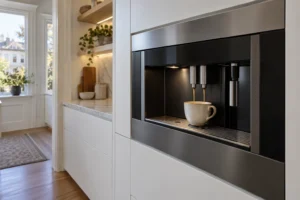
Countertop and built-in Miele coffee machines in San Francisco homes: models we list, label location, brewing and water faults, display codes and…
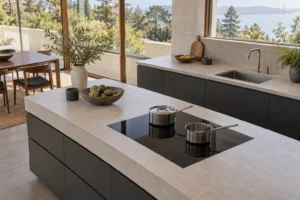
Induction, electric and gas cooktops, CombiSets and rangetops from Miele: sizes we service, common faults, display codes and safe checks.
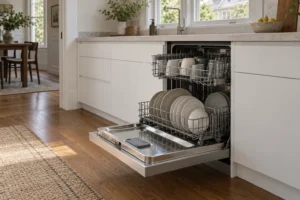
What San Francisco owners should know about Miele dishwashers: models we list, where the label is, drain and leak complaints, display codes…
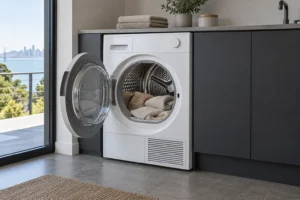
A San Francisco guide to Miele dryers, including heat-pump units: models we list, label location, slow drying complaints, display codes and checks…
Share a few details and we’ll confirm an appointment. Prefer to talk? Call us and we’ll help right away.