


Specialized Miele Appliance Repair in San Francisco
Mon–Sat: 8:00 AM – 7:00 PM
Bottles feel warm, the display shows a higher temperature than you set, or the unit runs without chilling. Here is how to separate a setup issue from a cooling fault.
Miele repairSan Francisco Bay Area
A wine cooler asks for very little, which makes a warm cabinet easy to notice and puzzling to explain. Unlike a standard fridge, it is expected to hold a gentle temperature with minimal swings, so even a small cooling problem becomes visible on the thermometer long before food would spoil. The causes run from simple things you can fix in a few minutes to sealed-system faults that need a technician.
Think back over the days before the problem began. Was a new cabinet or panel installed around the cooler? Did a heavy delivery of bottles go in at once? Was the door left ajar during a party? Did the power flicker, or was the unit unplugged while someone cleaned the area? Most cooling complaints on wine coolers have a recent event behind them, and that event narrows the cause.
A cooler moves heat out of the cabinet and into the room, and it needs air to carry that heat away. Built-in and undercounter units rely on a grille, usually at the bottom front, and on clear space around them. A grille blocked by a rug, boxes or dust, or a cabinet that was built too tightly, lets the heat build up. The cooler then runs constantly and chills poorly.
A gasket that is dirty, curled or torn lets warm room air in every time the compressor pauses. A door that sits slightly out of square, perhaps because a built-in cabinet has shifted, does the same. A bottle that sticks out too far at the front can also hold the door off the seal.
The set temperature may have been changed by a bump on the touch panel, or a lock function may have been left on. Some units have separate zones, and the one you are checking may not be the one you adjusted. Read the display and compare it with the temperature you intended.
A large batch of room-temperature bottles takes a long time to bring down, and during that time the readout will look high. Bottles pressed against the back wall or blocking air passages also slow circulation.
When the interior fan stops, the air no longer moves across the cooling surface and the cabinet warms unevenly. A temperature sensor that reads wrongly makes the control run the unit at the wrong time. A failing control board may cycle the compressor oddly or not at all.
If the compressor runs steadily but the cabinet never cools, or the compressor does not start although everything else seems alive, a sealed refrigeration issue is possible. This is the part you must never touch. It needs a technician with the right equipment.
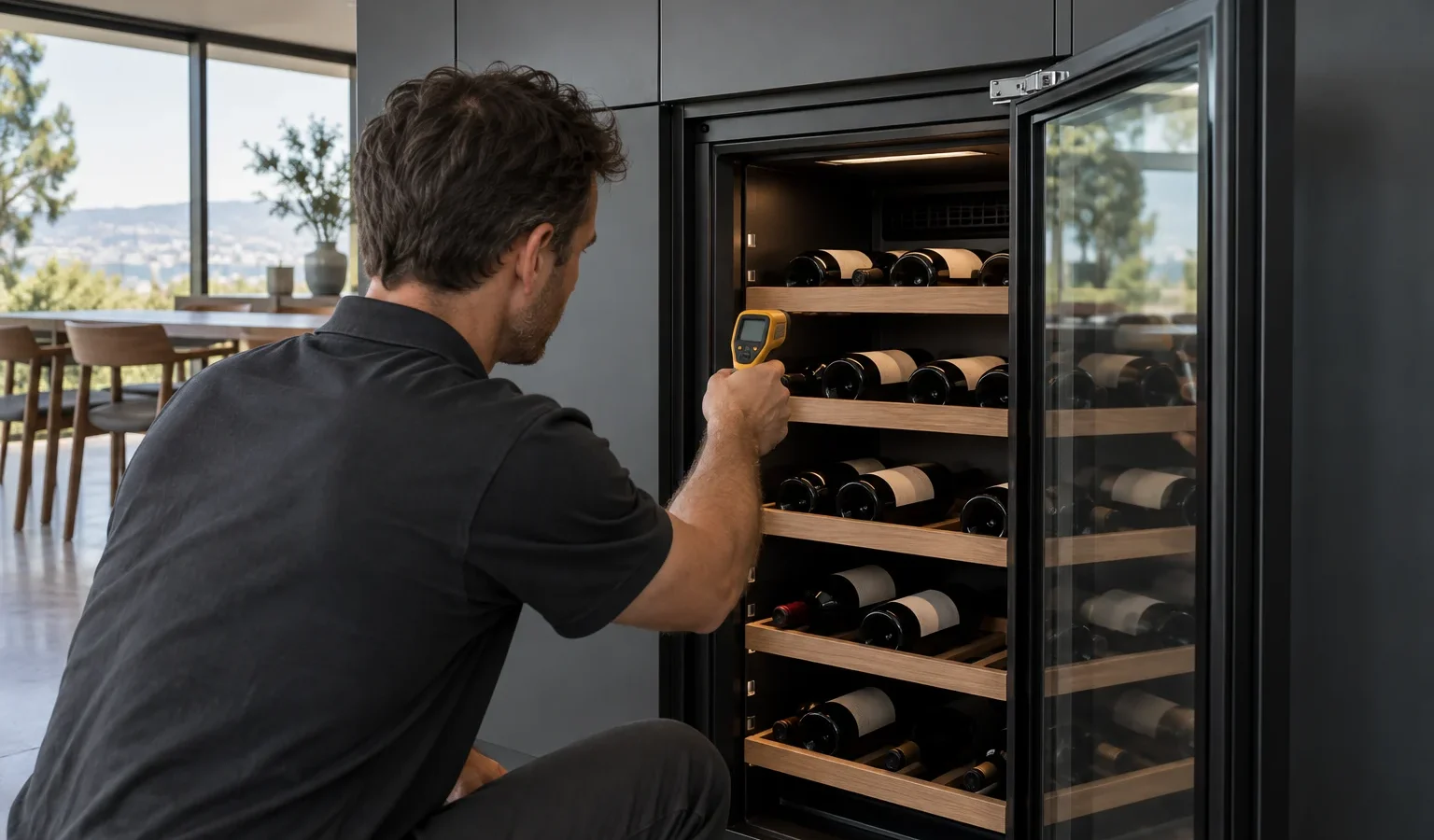
Many Miele wine coolers are built in flush with cabinetry in kitchens, bars and entertaining rooms. Panel-ready and undercounter designs hide the unit behind or between furniture, and the more finished the space looks, the less room the cooler may have to breathe. In a San Francisco condo, a cooler tucked into a bar niche with a closed cabinet above can trap its own heat. A technician will look at the clearance around the unit as well as the unit itself, and may suggest changes that do not require repair at all.
Coolers placed near a dishwasher, oven or sunlit window also work harder, and a unit in an unheated garage or basement can face the opposite problem on cold nights. Say where the cooler sits when you book.
Book if the cabinet stays warm after the grille is clear and the door seals well, if the compressor never seems to stop, if you hear clicking without any cooling, if ice builds up where it should not, or if bottles sweat heavily. The longer a bad cooler runs, the more it strains, and a valuable collection should not sit in a warming cabinet.
The label is usually inside the cabinet wall or behind the door frame, and our article on how to find your Miele model number explains the common spots. Wine coolers listed on the site include the KWT 6312 UGS and the KWT 2672 ViS, a 24-inch model. You can read about our work in Miele wine cooler repair and see the range in Miele wine coolers.
Our visit starts with diagnosis, followed by a written estimate. Nothing is repaired until you approve it.
That depends on the load and the room, so no single time applies. If the cabinet is still clearly warm after a full day of running, have it checked.
No. Blocked ventilation, a poor door seal and wrong settings are all more common. A fan or sensor issue is also possible before the sealed system is suspected.
It is safer to move valuable bottles somewhere cool and stable while the cooler is unreliable. Avoid using a home fridge that is also too cold.
Write it down exactly and leave it for the technician. The precise wording, along with when it appeared, helps with the diagnosis.
Yes. A built-in unit needs clear ventilation space, and a cabinet that traps heat can make an otherwise healthy cooler struggle.
Share a few details and we’ll confirm an appointment. Prefer to talk? Call us and we’ll help right away.