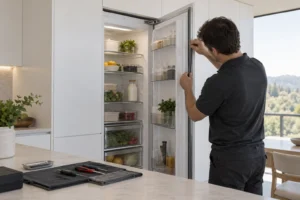
Refrigerator Repair in San Francisco
Diagnosis for Miele built-in, panel-ready, column and undercounter refrigerators and freezers across San Francisco and the Bay Area, with a written estimate…

Specialized Miele Appliance Repair in San Francisco
Mon–Sat: 8:00 AM – 7:00 PM
Columns, under-counter units and panel-ready doors: what to know about the Miele cooling in your San Francisco kitchen.
Miele repairSan Francisco Bay Area
Miele refrigeration in San Francisco rarely looks like a freestanding box. It is usually a tall column set into cabinetry, a panel-ready door that matches the kitchen, or an under-counter unit tucked beside a dishwasher. That built-in setting shapes almost every repair. Airflow is tight, the door is heavy with a cabinet panel, and the display is the first place a problem shows up. Our Miele refrigerator repair service covers the whole range, and this guide helps you recognize which kind of unit you own.
We cover seven refrigeration units that show up regularly in Bay Area kitchens. Several are MasterCool units: the F 2601 Vi and F 2611 Vi are 24″ freezers, the K 2802 Vi and K 2812 Vi are 30″ refrigerators, and the KF 2912 SF is a 36″ refrigerator-freezer. The K 31222 Ui is an under-counter refrigerator. The F 1473 Vi is an 18″ single-door refrigerator/freezer that is no longer sold new, yet many are still working in older condos and flats.
The label is usually on the inside wall of the fresh-food compartment or along the door frame. On under-counter units it is often visible once the door is open and the lowest shelf is lifted out. Photograph it. The full model line lets us plan the first visit properly.
When one side is warm and the other is cold, the cause often lies in air movement or defrost rather than the compressor itself. A technician looks at the evaporator fan, the defrost circuit, the damper and the sensors before suggesting a larger repair. Our article on a Miele refrigerator not cooling walks through that sequence in more detail, and a refrigerator making noise covers fan and compressor sounds.
Miele refrigeration shows codes that begin with F. Some are plain reminders. F141 through F143 mean the fridge door has been open for 15, 30 or 45 minutes, and F144 through F146 describe the same for the freezer door. Closing the door properly, and checking that nothing in the cabinet opening holds it ajar, usually ends the alert.
Others point to a part. F114 is a faulty freezer evaporator sensor, F120 refers to mains voltage that is too low or swings widely, F121 flags a defective ice cube maker, and F383 is a faulty ice maker water inlet. F384 and F385 indicate that the appliance software has crashed. Codes F0 to F5 are technical faults that are not something an owner can remedy. See the F0 code page for the first of them. Write down the exact code and when it appeared.
Please do not remove interior panels, chip ice off evaporator covers, or touch the sealed refrigeration lines at the back. If food is warming, move perishables into a cooler first.
Book when a code returns after a reset, when frost keeps coming back, when water leaks, or when the temperature will not hold. Our process is diagnosis first, then a written estimate, and nothing is repaired without your approval. To get started, open the refrigerator repair page and request a visit, or browse our full range of Miele appliance guides.
Cold air for the fresh-food side travels through ducts and a damper from the freezer section. A stuck damper, a failed fan or a frosted evaporator can block that path while the freezer itself stays cold. A technician traces the airflow before replacing anything.
A door-open alert is only a reminder. A fault code or a rising temperature is different. Move perishables to a cooler if the compartment no longer feels cold, and keep the doors closed as much as possible until it is checked.
It can. A heavy cabinet panel may sag and keep the gasket from sealing along one edge. Warm air then enters and frost forms near that corner. Part of a visit is checking that the door closes fully and squarely.
Give the model line from the label, the exact code or message on the display, and when the symptom began. A short note on whether the unit is a column, under-counter or panel-ready also helps.
Discontinued does not mean unrepairable. We diagnose it like any other unit and tell you in the written estimate what the repair involves, so you can decide before any work starts.
Diagnosis for Miele built-in, panel-ready, column and undercounter refrigerators and freezers across San Francisco and the Bay Area, with a written estimate…
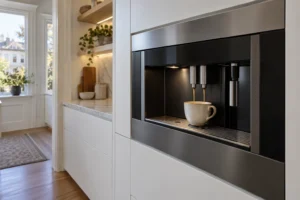
Countertop and built-in Miele coffee machines in San Francisco homes: models we list, label location, brewing and water faults, display codes and…
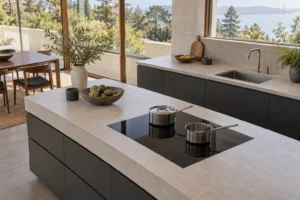
Induction, electric and gas cooktops, CombiSets and rangetops from Miele: sizes we service, common faults, display codes and safe checks.
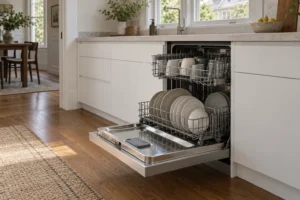
What San Francisco owners should know about Miele dishwashers: models we list, where the label is, drain and leak complaints, display codes…
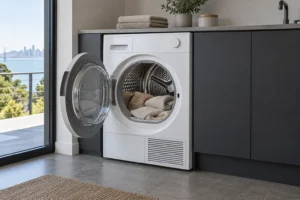
A San Francisco guide to Miele dryers, including heat-pump units: models we list, label location, slow drying complaints, display codes and checks…
Share a few details and we’ll confirm an appointment. Prefer to talk? Call us and we’ll help right away.