


Specialized Miele Appliance Repair in San Francisco
Mon–Sat: 8:00 AM – 7:00 PM
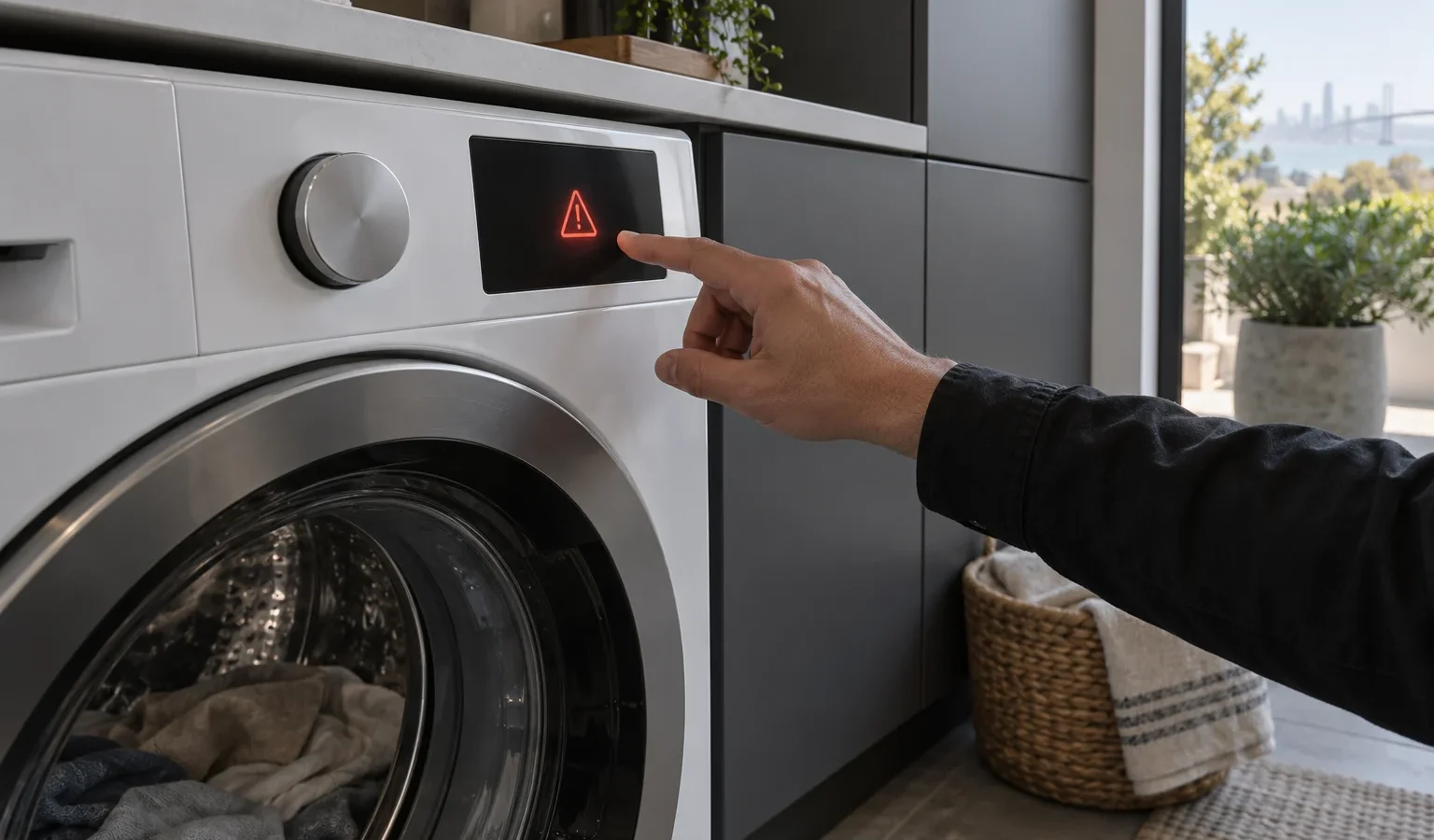
A code on a Miele display is a clue, not a verdict. See how letters, numbers and plain messages are used across appliance types and what to do before and after you read one.
Miele repairSan Francisco Bay Area
When a Miele appliance stops mid-program and shows a letter and number, it is telling you where its own monitoring noticed something wrong. That is useful, but it is not a full diagnosis. The display tells you which circuit, sensor or condition triggered the message. It does not always tell you why, and it rarely tells you the single part that needs replacing. Used well, a code shortens the diagnosis. Used badly, it leads to the wrong guess.
The first rule is that a code belongs to one family of appliances. An F-code on a dishwasher and the same F-code on a washer, a coffee machine or a steam oven are not interchangeable. The dishwasher F11 code, for example, is listed for water that remains in the wash cabinet, with a misplaced non-return valve or a blocked drain pump as possible reasons. The steam oven F11 code describes water that cannot drain from the steam generator because of limescale or blocked hoses. Same label, different machine, different cause. The list of meanings at Miele error codes is organized by appliance for exactly this reason.
Letters followed by digits, such as F and a number, usually point to a technical condition the appliance has detected: a sensor reading that is out of range, a water path problem, a heater issue or a module fault.
Dishwashers and some other appliances show words such as drain, waterproof or an instruction about the water tap. These describe a condition in plain language. The dishwasher Waterproof message, for instance, means the leak protection has reacted.
Some codes simply tell you maintenance is due. A filter cleaning prompt on a dishwasher is one case, listed under F177. Steam ovens show progress indicators during descaling that run from E0 to E5, which the site lists as stages rather than errors, and cooktops show a lock indicator such as LC, meaning the safety lock is on.
A refrigerator door-open message such as F141 is a warning about a door that has stayed open, not a malfunction.
Some appliances describe a code as a technical fault, or an electronic module fault. These usually need a technician because the display is reporting something the owner cannot reach.
Repeated restarts do not fix a real fault. They can leave water in places it should not be, strain a pump or put a heater under stress.
Several different faults can produce the same display. A water intake code, for instance, may come from a closed tap, a clogged filter, a weak valve or a sensor that misreads. A heating code could involve the heater, the temperature sensor or the control. The technician reads the code as a starting point, then uses the model number, the appliance’s behavior and tests to identify the actual cause. That is why we diagnose before suggesting any repair.
Codes and their meanings can depend on the model group. The same message may be listed only for certain generations or sizes, which is why we note where a meaning applies. Having the model number ready lets us read your code correctly. Our article on how to find your Miele model number shows the usual label locations.
If you want to look for a particular family, these are the places to start:
Certain situations override everything else. A burning smell, smoke or sparks means switching the appliance off at the breaker. Water spreading across the floor means closing the supply valve and cutting power if it is safe to reach. A gas smell means leaving the home and calling the gas utility or 911 from outside. In those cases, the code is secondary to getting safe.
Bring the exact wording of the message and any detail about when it showed up, even if it seems minor. A code that appears only during the rinse stage, or only after a long idle spell, points a technician toward a very different part of the machine than one that appears at power-on.
We start with diagnosis, using your code, the model number and what you observed. Then we give you a written estimate, and we repair only what you approve.
No. Meanings are tied to the appliance type, and sometimes to a model group within it. Always check the family before reading a code.
No. Some are reminders, progress indicators or locks. Others warn about a door or a water supply that you can fix from the outside.
A single controlled power reset can clear a temporary glitch, but if the fault is real the code returns. Repeating it does not help.
Be careful. Fixes written for another appliance or model can send you inside the machine. Stay with outside checks and let a technician handle the rest.
The appliance type, the exact code or message, the model number from the label and a short note on what it was doing when the code appeared.
Share a few details and we’ll confirm an appointment. Prefer to talk? Call us and we’ll help right away.