


Specialized Miele Appliance Repair in San Francisco
Mon–Sat: 8:00 AM – 7:00 PM
A heat-pump dryer works only as well as its filters let it breathe. Learn what to clean, how often, and which symptoms mean the problem is no longer lint.
Miele repairSan Francisco Bay Area
A heat-pump dryer recycles its warm air instead of sending it outdoors. Air circulates through the drum, passes over a heat-exchange area where moisture is removed, and returns to be warmed again. Because that loop is closed and gentle, lint that escapes the filters does not leave the house; it settles in the heat-exchange area and slowly smothers it. That is why filter care matters more here than on many simpler dryers.
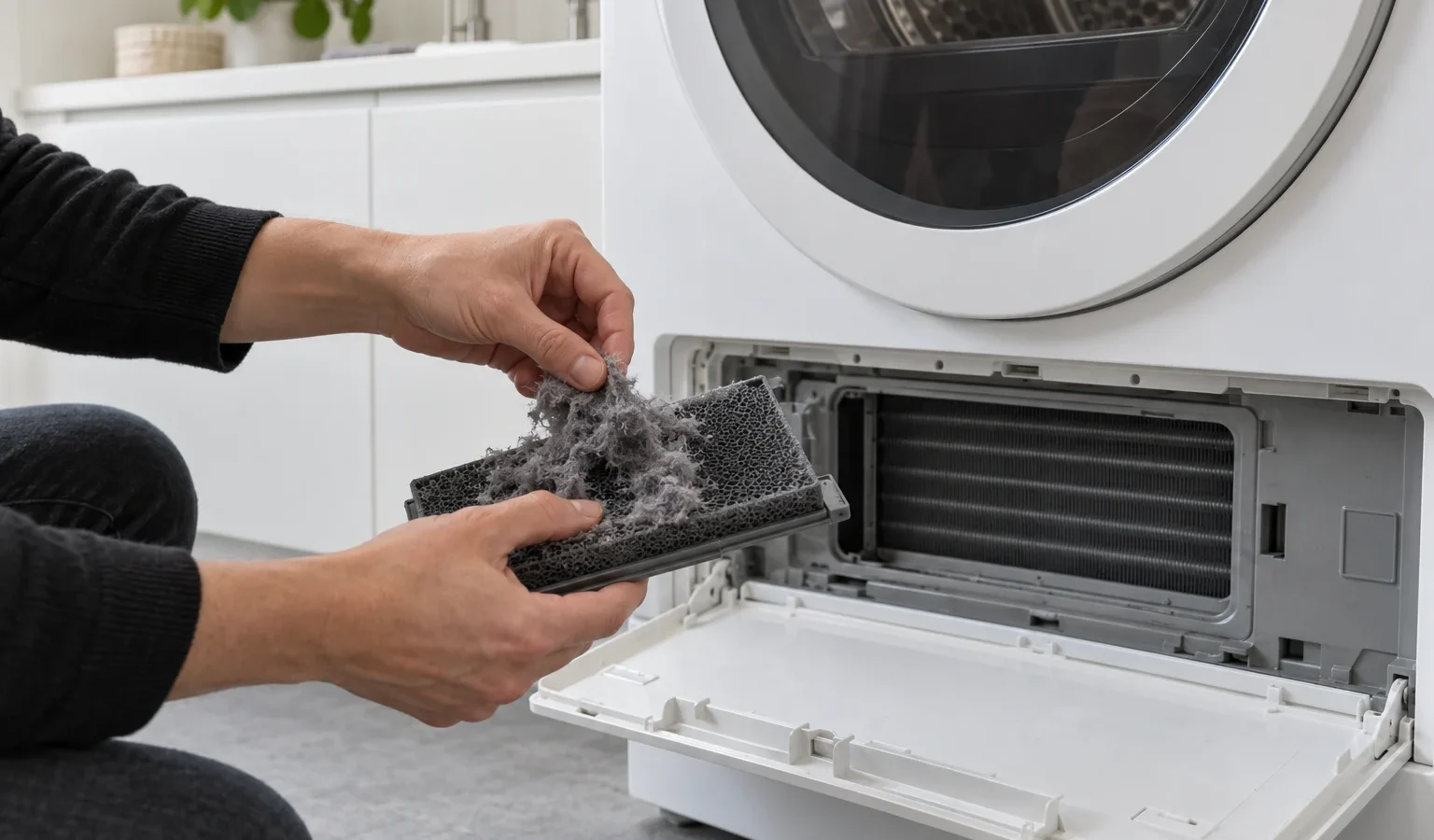
Think of the filters as the gatekeepers of a very clean air path. A fresh filter lets air through easily. A filter coated in a fine film of lint lets less air through, so each cycle takes longer and the machine works harder. Miele describes code F66 as usually pointing to fluff filters or the plinth filter not being cleaned or too wet, and also overload or blocked ventilation. In other words, the manufacturer itself names the filters first.
Apartments in San Francisco make this more important. Closets and stacked columns keep air still, and many households wash towels, workout clothes and fleece that shed heavily. All of that lint heads toward the filters.
Most Miele dryers have a set of fluff filters in or around the door opening, and some have an additional filter in the plinth, the base area at the bottom front. Models differ in layout, so the manual for your dryer tells you which filters it has and how they come out. If you are unsure which model you own, look for the label on the door rim or the frame behind the door; our guide on finding your model number lists the usual locations.
Machines such as the Miele TWF160 WP and Miele TWI180 WP are shown on this site by model number only, so confirm your own layout from the owner manual rather than assuming it matches a neighbor.
Sometimes the filters are clean and the dryer still struggles. Watch for these patterns.
Those are signs for a technician, not for more cleaning. The dryer should not be forced through repeat cycles while one of them shows.
Do not run the dryer without its filters or with a damp filter fitted. Do not use sharp tools to scrape lint off the mesh, which can tear it. Do not pour water into the air path or spray cleaners into any opening. Do not remove panels to reach the heat-exchange area, and do not tamper with the refrigerant circuit; that is sealed and not an owner task. Burning smells or sparks mean you switch off at the breaker and leave the dryer off until it has been checked.
Many Bay Area homes put the dryer in a hallway closet or stack it over a washer. Leave the closet door open or louvred during a cycle so the room can supply and absorb air. Keep the area around the dryer clear of baskets and detergent bottles, and keep the feet level. If the dryer sits in a column, give the front some clearance so the door opens fully for filter removal.
Heat-pump dryers also give off a little warmth into the room, which is gentle but still real. A tiny closet with the door shut can raise its own temperature, which makes the machine work harder. A few inches of open air do more good than any gadget.
Heavy shedders, such as new towels, fleece and flannel, produce far more lint than cotton shirts, so clean the filters after every one of those loads. Wash new towels separately a couple of times first. Overloading the drum also pushes lint into places the filters do not catch, so keep loads sensible. A Miele PDR 908 HP or any other model behaves well with a drum that has room to tumble.
If you have cleaned all the filters, dried them and shortened the loads and the dryer still struggles, book a diagnostic visit. Tell us the model number, the display message and what you cleaned. We diagnose before repair, give a written estimate, and repair nothing without your approval.
See Miele dryer repair, the Miele dryer lineup, or send a request through the contact page. You can also read why a dryer takes too long to dry if cycles have stretched out.
They need steady attention because their air loop is closed, so lint that passes the filters settles in the heat-exchange area instead of leaving the house.
Yes, a glazed filter can be rinsed under lukewarm water. It must be fully dry before it goes back, because moisture in the air path works against drying.
Check your owner manual and the base of the dryer, usually at the bottom front. Layouts differ between models, so confirm yours with the model number.
Only if the manual describes an owner step that needs no tools or panels. Anything that requires opening the cabinet or touching the refrigerant circuit belongs to a technician.
Write down the exact message, clean and dry the filters once more, try one controlled power reset, and book a visit if it returns.
Share a few details and we’ll confirm an appointment. Prefer to talk? Call us and we’ll help right away.