


Specialized Miele Appliance Repair in San Francisco
Mon–Sat: 8:00 AM – 7:00 PM
When the ice bin stays empty, the fault is usually water, freezing or the maker itself. Learn the checks in order and what the ice-maker codes refer to.
Miele repairSan Francisco Bay Area
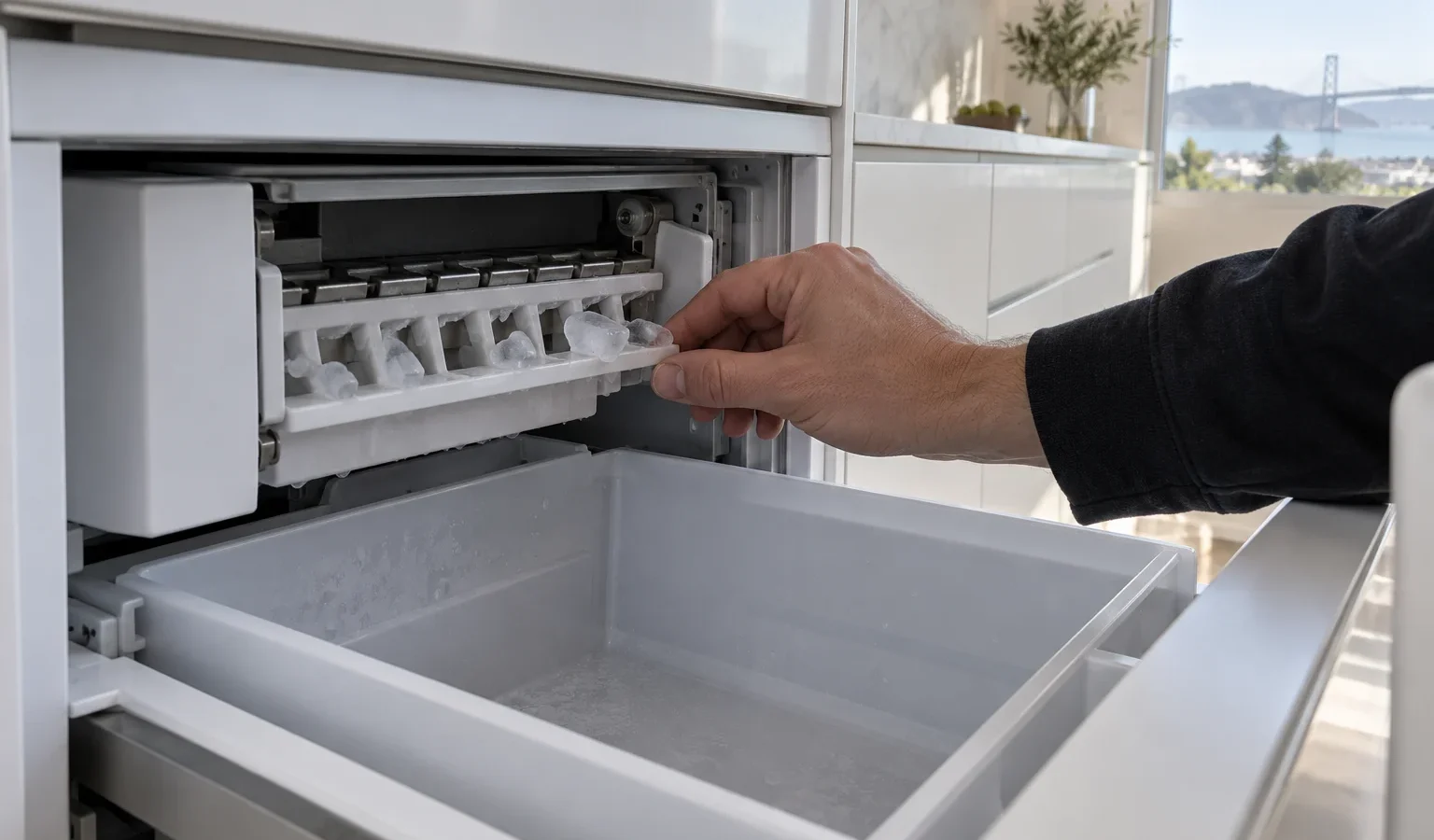
An ice maker has a simple job and a surprisingly long chain of conditions behind it. Water has to arrive through a supply line and a valve, the freezer has to be cold enough to freeze it, the mold has to fill and release, and the bin has to sense that more ice is needed. If one link fails, the bin stays empty. Because the cause could sit anywhere along that chain, checking in order saves time and avoids a visit for a problem that a kinked line or a full bin could explain.
Those are all the outside checks. Do not pry at the mold, use tools to free a jam or open the back of the unit. Water and electricity share that space.
If the freezer is cold and the maker is switched on, suspect water. A closed valve, a kinked line, a clogged filter or a failed inlet valve will leave the mold dry. A tray that never fills may also be waiting on a control that has stopped asking for water. A dry mold with a healthy supply points to the maker or its control.
Weak water flow produces light, partial cubes. Partly blocked lines, a filter that needs changing or low household pressure are common reasons. This often develops slowly, so cubes that have been getting smaller over weeks are a hint to look at the supply side.
Clumping suggests that ice partly melts and refreezes, which can follow frequent door openings, warm air from a poor seal or infrequent use. Stale taste from old ice and a dirty bin calls for emptying and cleaning, and for checking any water filter your model uses.
A warm freezer cannot freeze cubes. If the freezer is not holding its temperature, follow Miele refrigerator not cooling first, because the ice maker is only a symptom there.
Two codes concern the ice maker directly. Miele refrigerator F121 is described as an ice cube maker fault that can come from voltage fluctuation, no or low water pressure, or a mechanical or electrical failure. Miele refrigerator F383 refers to the ice cube maker’s water inlet being faulty. If your display shows either, write the code down exactly and check the water valve and line, then stop. The descriptions are broad, so a technician confirms which fault applies. The full list is under Miele error codes.
Built-in and column refrigerators are often fed by a small supply line run through a cabinet wall or the floor. In older San Francisco flats and row houses that line may be copper or plastic, may pass a shut-off valve that was fitted years ago and may have been moved when the kitchen was remodeled. Condensation on a cold pipe, a pinched line behind a tightly fitted unit and a valve that has been left half closed after work in the kitchen are all familiar causes. A technician tracing the problem looks at pressure at the valve, the filter, the inlet valve on the unit and the freezer’s own temperature behavior.
The technician explains what was found and gives a written estimate. Nothing is repaired without your approval, and the visit follows the same pattern described under Miele refrigerator repair.
Do not force ice out of the mold with a knife or screwdriver, pour hot water into the mechanism, or disconnect the water line while the valve is open. Do not repeatedly reset the unit hoping the maker will restart. If there is water on the floor, close the supply valve and switch the unit off at the breaker.
Book a visit if the valve and line are fine and ice still does not appear, if a code shows up repeatedly, if the water inlet seems to leak, or if the freezer is not cold. Keep the model number ready. It is usually on a label inside the compartment, and our Miele refrigerator lineup page shows what we handle. A freezer such as the Miele F 2601 Vi is listed as a freezer, while a refrigerator-freezer like the Miele KF 2912 SF combines both. Whether either has an ice maker is something the label and the unit itself will tell you.
A humming valve or a motor running without water suggests the mold is not filling. Check the supply valve and line first, then arrange a diagnosis if the sound continues.
Give it time to cool and fill the mold, and do not judge from the first tray. If nothing appears after a full cycle of normal use, the water path or the maker needs checking.
It can reduce flow enough to cause small cubes or none at all. Check your manual for the filter on your model and replace it if it is due.
No. It describes a fault in the ice cube maker, with possible causes including water pressure and voltage. A diagnosis shows which cause applies before anything is replaced.
Yes, usually, as long as the refrigerator and freezer are cold and nothing is leaking. Close the water valve to the unit if you see water.
Share a few details and we’ll confirm an appointment. Prefer to talk? Call us and we’ll help right away.