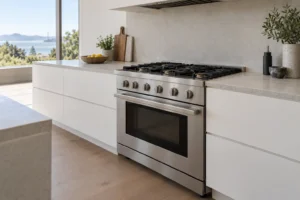
Ranges: Gas, Dual-Fuel and Induction
Miele ranges bring oven and cooktop into one body. See the models we service, where problems start, and what you can check…

Specialized Miele Appliance Repair in San Francisco
Mon–Sat: 8:00 AM – 7:00 PM
Oven, burners and controls share one cabinet, and we diagnose all of it before you approve a repair.
Miele repairSan Francisco Bay Area
A range puts an oven, a surface and often a lot of money into one cabinet-width appliance, so when one half stops working the whole kitchen slows down. We service Miele ranges in San Francisco and across the Bay Area: gas, dual fuel and induction, from older retired models still working in long-owned homes to current freestanding and slide-in units.
This is the most common call. The oven lights, the fan runs, the display looks fine, yet the food stays underdone. On a gas range a technician looks at the oven igniter and the safety valve it opens, because an igniter that glows weakly will not let gas flow. On an electric or dual fuel range the bake and broil elements, their wiring and the temperature sensor come first. Uneven baking, one rack browning faster than another or a door that does not seal point toward the fan, the sensor or the door gasket instead. Our post on a Miele range oven that is not heating lays out the checks in order.
Gas burners that click without lighting, lift off the flame or burn unevenly are a separate problem from the oven. On an induction range, a zone that stops, a booster that cuts out or a fault shown on the display usually involves the cookware, the cooling fan or the electronics below the glass. Because the top and the oven are one machine, a fault in the shared power supply can show up in both places at once.
A door that stays locked after a cleaning cycle, a latch that never engages, a display that flickers or a control panel that responds to some touches and not others each have different causes. A loose or worn latch mechanism is a different repair from a failing control module, and the way the symptom behaves tells us which one to suspect.
A first heating after installation can smell a little, but a persistent burning odor, smoke from the oven or a fan that grinds or squeals deserves attention. Food spills on the oven floor or around the door gasket are often the cause. If the smell is sharp or electrical, power the range off at the breaker.
Which fuel your range uses decides what we bring and how we work.
Ranges are heavy and sit tight against cabinets, so access is part of the repair plan. A range that has been slid into a cutout may be hard to pull out without damaging flooring or the gas connector, and in a San Francisco flat with a narrow hallway or stairs we think about that before arriving. Anti-tip hardware, the position of the gas shutoff behind the unit, the outlet or hardwired connection and the clearance to a ventilation hood above all affect how we work. If the hood overhead struggles to clear steam and grease, see Miele ventilation hood repair, because a poorly performing hood lets heat build around the range controls.
Many older homes in the city have gas lines and circuits that were altered during past remodels. If a range was moved or replaced, we pay attention to whether the supply matches what the unit expects.
Miele ranges show messages on the display when a part of the system is out of range. We do not guess at meanings. When your range shows a code, write it down exactly, along with what you were doing, and keep it until we arrive. The wider explanation of how Miele reports faults is in Miele error codes explained, and surface-related codes for the induction cooktop side are collected in the error codes page.
Do not open panels, test live connections, touch gas fittings or bypass a door lock.
You smell gas, notice a burning odor, see sparks, find melted wiring or plastic, or the oven will not switch off. For gas, leave, avoid switches and call the gas utility or 911 from outside. For sparks or burning, turn off the breaker. A single burner that fails to light is not a reason to keep trying with a match.
The label on a range is usually on the oven frame behind the door or on the edge of the oven opening, and sometimes under the cooktop or in the storage drawer area. The number tells us the fuel, the parts we need and the control generation, so it saves a second trip. Our short guide on finding a Miele model number shows other places to look.
We diagnose before repairing. You hear what we found, receive a written estimate, and nothing is repaired without your approval. Appointments run Monday to Saturday, 8:00 AM to 7:00 PM. Tell us about stairs, elevators, parking and building rules when you request the visit so the technician arrives ready to move the range if that is needed.
The Miele range guide covers the lineup and the complaints we hear most. If you have a separate built-in oven, see Miele wall oven repair.
Confirm the breaker and, for gas, the shutoff valve, then make sure the door closes fully. If the oven still does not reach temperature, the igniter or valve on a gas model, or an element or sensor on an electric one, usually needs a technician.
Yes, and they often do. They share a cabinet and sometimes a power supply, but burners, elements and controls are separate parts, so a working top does not rule out an oven fault.
Yes. Models such as the HR 1135 GR and HR 1421 E are no longer sold new, but many are still in service and we diagnose them the same way.
If there is no gas smell, burning odor or sparks, the top may still be usable, but a fault in shared wiring or the control board can affect both. When in doubt, switch the range off and book a diagnosis.
The model number, the fuel type, any message on the display, what you noticed first and whether the range was recently moved or serviced. Access notes about stairs and parking also help.
Miele ranges bring oven and cooktop into one body. See the models we service, where problems start, and what you can check…
Water, brew unit, milk system or heating: we trace what stopped your Miele built-in or countertop coffee machine in San Francisco and…
Gas, electric and induction Miele cooktops and rangetops diagnosed in San Francisco and the Bay Area: igniters, zones, sensor controls, cooling fans…
Miele dishwasher diagnosis in San Francisco and the Bay Area: draining, water intake, pump, door and dispenser faults, with a written estimate…
Miele dryers that run damp, stop with a fault message or refuse to start get a diagnosis first. We serve San Francisco…
Share a few details and we’ll confirm an appointment. Prefer to talk? Call us and we’ll help right away.